

The Problem
Growth was strong. The question was what came next.
Readly is one of Europe’s largest digital magazine subscription apps, think Spotify for magazines, giving subscribers access to thousands of titles across every category imaginable. Based in Sweden, with major markets in the UK, Germany, and across Europe, the business had been scaling rapidly and was on a trajectory towards IPO. That brought its own pressure: sustaining 30% year-on-year growth in both users and monthly recurring revenue isn’t something you can do by simply doubling down on what already works.
When I joined to support growth and user acquisition, the business was in good shape. Existing paid digital channels — Meta, paid search — were performing. But the marginal return on those channels was starting to compress. We needed to find new pools of potential subscribers, particularly among slightly older, higher-intent audiences: people who genuinely loved magazines but hadn’t yet discovered a better way to read them.
LTV:CAC was our north star. The challenge wasn’t just finding new users, it was finding the right ones, efficiently, without blowing up unit economics in the process.
the solution
Applying digital logic to analogue media.
During a growth hacking session internally, mapping friction points across the full funnel, the idea of direct mail came up. Not the spray-and-pray kind, but something considerably smarter. That’s where Postie came in.
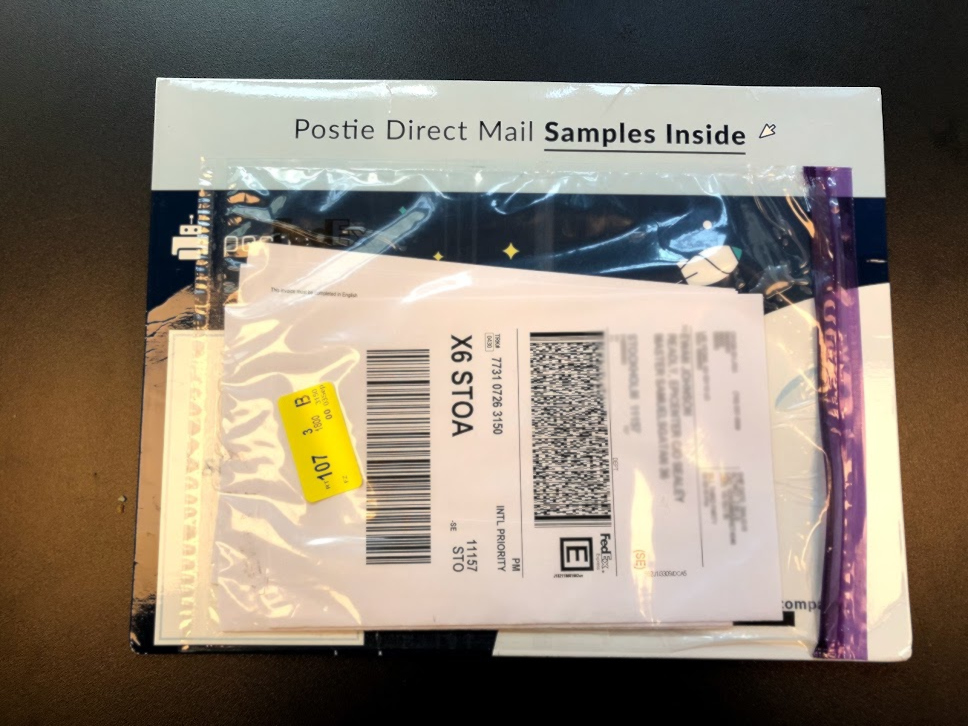
The core idea was straightforward: take Readly’s best-performing customer segments, particularly readers in their 30s and above, parents, frequent travellers, people with disposable time and a genuine affinity for magazines, and find people who looked just like them across the US, then mail them a physical postcard with a compelling introductory offer.
The workflow inside Postie started with a secure customer data import. From there, the platform built a lookalike model, cross-referencing our subscriber profiles against its proprietary dataset of demographic, financial, and behavioural signals, to identify the highest-probability prospect addresses across the country.
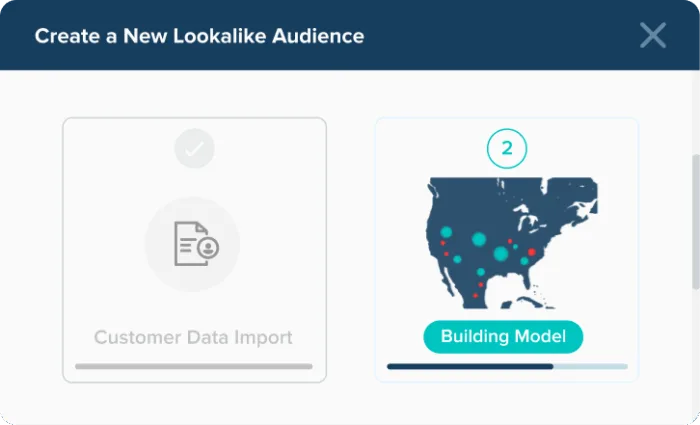
Uploading Readly’s customer data into Postie to begin building a lookalike model, the same principle as a Meta lookalike audience, but matched against physical addresses.
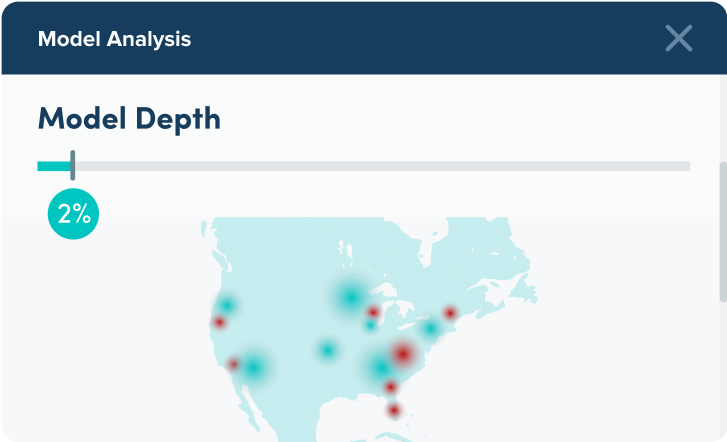
Model Depth analysis: adjusting the lookalike threshold to balance audience size against match quality.
Working closely with the CTO and legal team, we ensured all customer data was handled in compliance with privacy regulations before passing anything to Postie. Once the model was built and audiences approved, we moved to the creative phase.
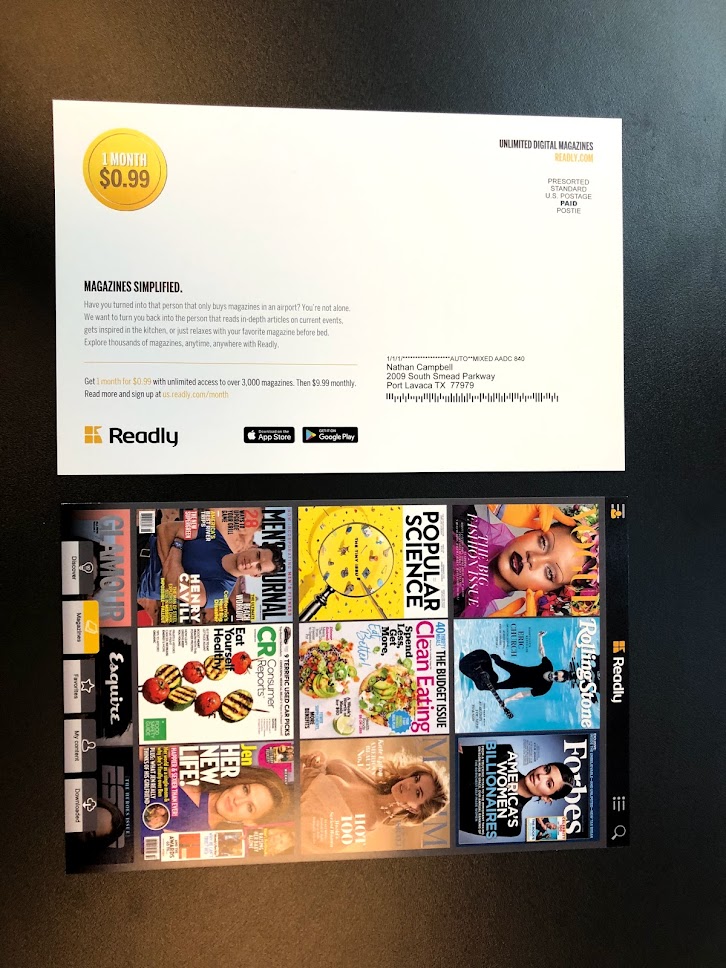
Our research pointed to a clear insight: for a magazine app, three titles matter. If a prospective subscriber sees three magazines they already love featured on the same platform, they’re far more likely to convert. So we designed the postcard around that, a vivid, app-mimicking visual on one side featuring a grid of recognisable titles, and a sharp offer on the other.
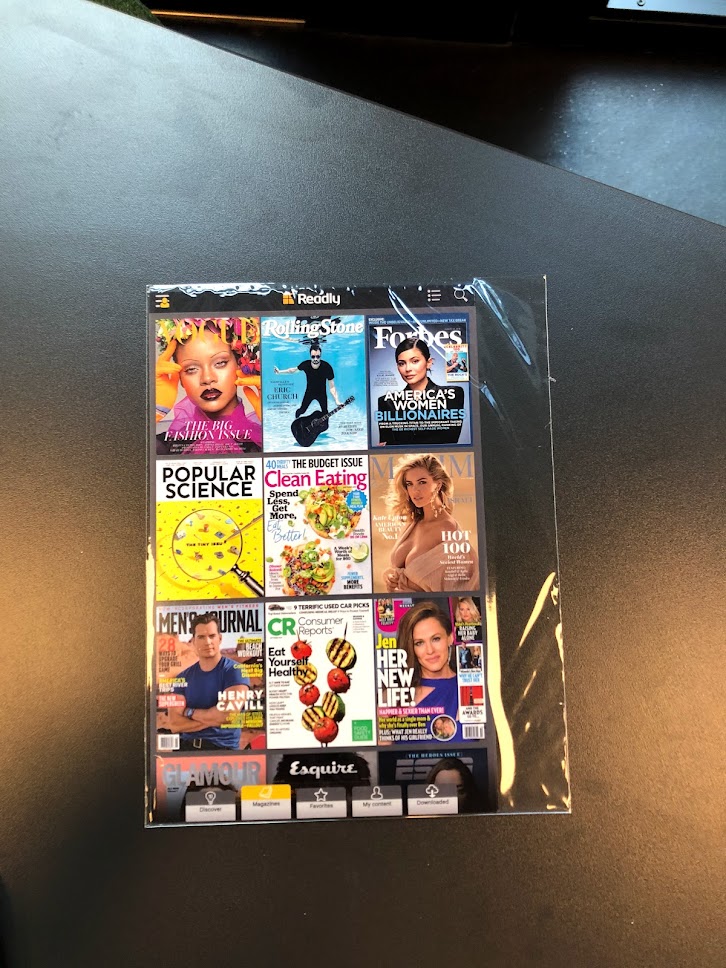
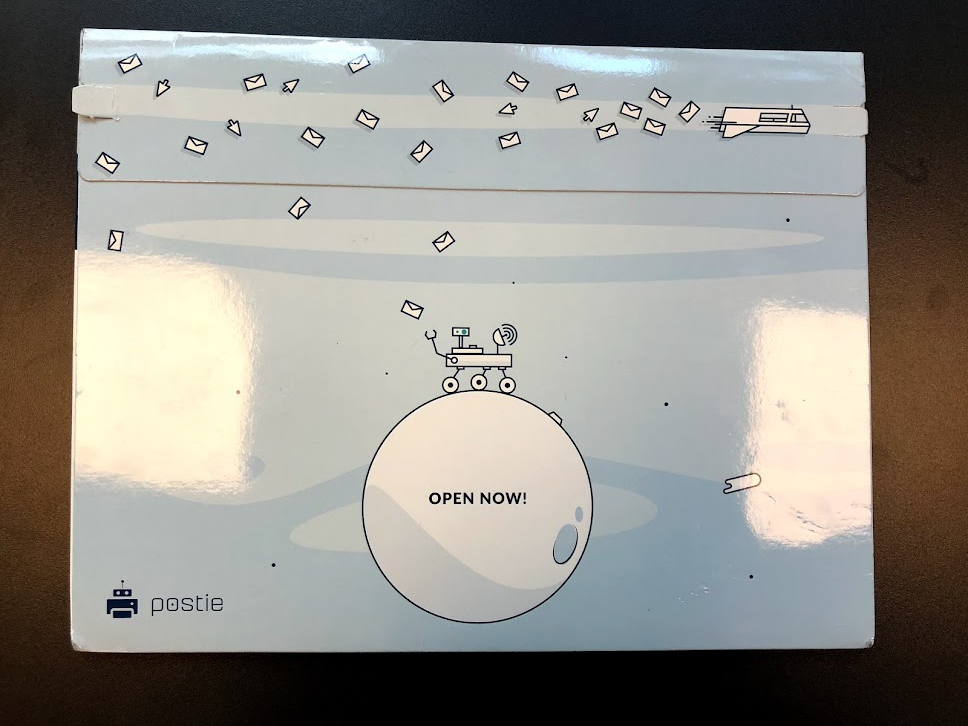
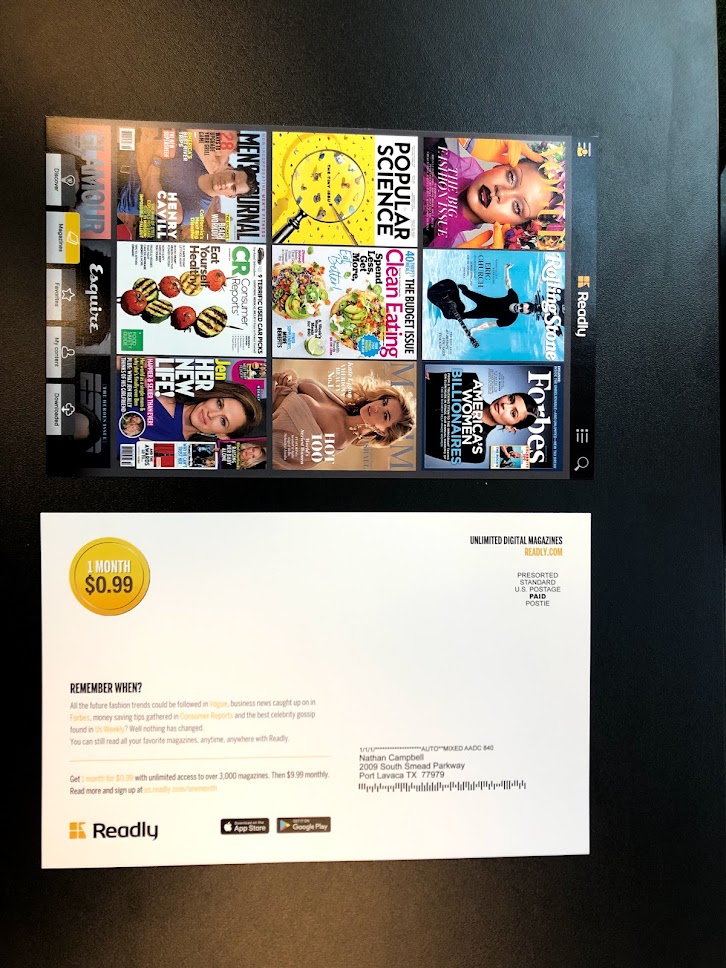
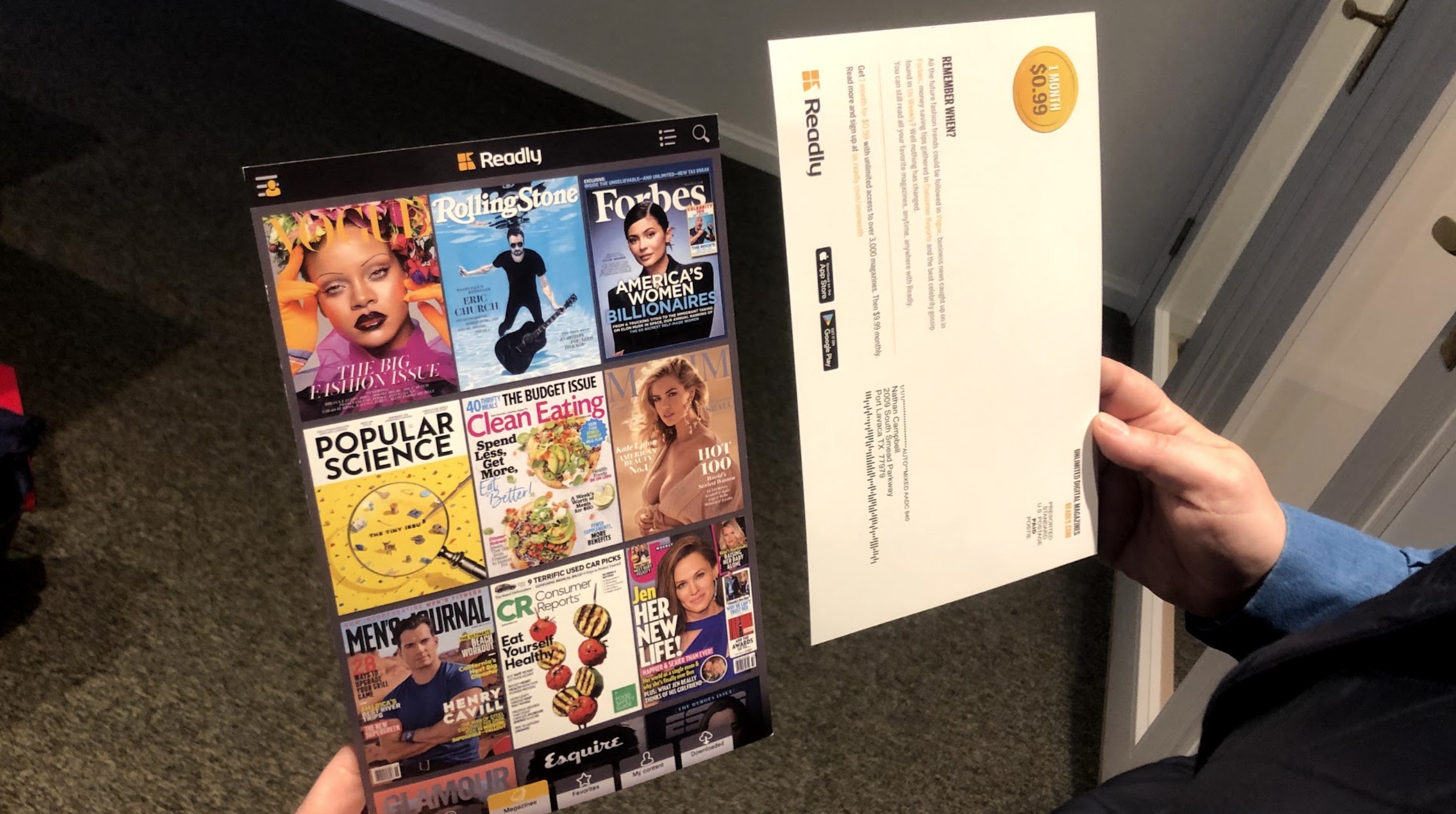
Variant A: “Remember When?”
The “Remember When?” creative was built around a simple truth: most of our target audience had grown up reading magazines. They hadn’t stopped loving them, they’d just lost the habit. This variant leaned into that directly, using nostalgic language to reconnect readers with the category before introducing Readly as the modern way back in.
The offer was deliberately aggressive, 1 month for $0.99, sharper than anything we were running across Meta or paid search at the time. For a channel where you’re competing with every other piece of mail in the house, a tentative offer doesn’t cut through. This one did.
From an attribution standpoint, this variant used a unique redemption code tied to the physical address it was mailed to. Where a recipient’s address matched existing records in our customer database or Postie’s dataset, we could connect a downstream app download or subscription back to this specific send. App Store and Google Play links on the reverse gave recipients a direct path to convert, keeping the journey as frictionless as possible from physical mailbox to digital subscription.
Variant B: “Magazines Simplified.”
Where Variant A led with emotion, Variant B led with logic. “Magazines Simplified.” was built around an insight our own research kept surfacing: the people most likely to convert weren’t magazine sceptics, they were magazine lovers who hadn’t yet realised there was a better way to read them. They were already spending $10 here, $5 there — buying individual titles, going to physical stores, or paying cover price at airports. Readly collapses all of that into one app, one subscription, one price.
The messaging did the maths for them. One subscription. Thousands of magazines. Simpler than anything they were doing before. It also aligned closely with Readly’s core brand positioning at the time, the clarity of that message was something our research consistently showed resonated with prospective subscribers.
Attribution worked the same way as Variant A, unique code, address-level matching, and direct app download links, giving us a clean A/B signal not just on which creative drove more conversions, but which framing landed better with which audience segment. The ability to compare a nostalgia-driven message against a value-driven one, at scale, across a physical channel, was one of the more interesting things this test unlocked.
Outcomes
A channel validated. Learnings banked.
The campaign ran for several weeks across a targeted US audience, and it produced enough signal to make a confident call on whether programmatic direct mail had a role in Readly’s growth mix.
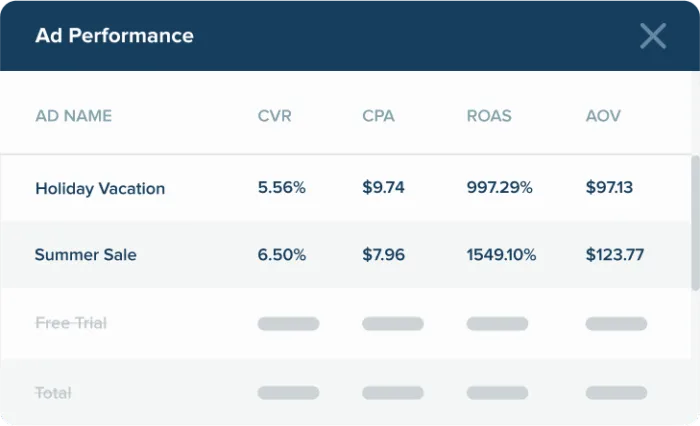
Postie’s Ad Performance dashboard, showing conversion rate, CPA, and ROAS broken down by creative variant, giving us the A/B signal we needed.
New audience reach worked. The lookalike model successfully identified and reached prospect segments we weren’t effectively targeting through digital-only channels, particularly slightly older, high-intent readers less prevalent in Meta or paid search audiences.
CAC was competitive. The cost per acquisition came in broadly comparable to our existing paid social benchmarks. For a first test, in a new channel, with physical production costs baked in, that was a genuinely encouraging result, it meant the channel had headroom to improve with further optimisation.
Attribution proved workable, but needed refinement. Unique codes provided a baseline attribution mechanism. Address-level matching added a secondary layer. But with privacy regulations continuing to tighten, building a more robust attribution framework would be a priority for any future phase.
Creative and offer intensity matter more than in digital. US consumers receive a significant volume of physical mail. Standing out requires bold creative and an aggressive introductory offer — more so than most digital contexts. This was a key learning we’d carry into a second phase.
Takeways
What I’d do with this channel next.
This was a test, and it delivered what a good test should: clear signal, honest data, and a sharper point of view on how to proceed. Here’s what I’d take into a second phase.